
As a new financial year begins, many business owners and leadership teams are reviewing budgets, setting revenue targets and refining strategic priorities.
They are asking important questions.
How do we grow?
Where will revenue come from?
What investments should we make?
What risks should we prepare for?
How do we respond to increasing economic pressure, rising costs, changing customer expectations and the many external factors that can make running a business feel harder than it needs to be?
And while some things are outside our control, one question is often overlooked:
Do we have the people capability to deliver our strategy?
Because a business plan without a people plan is only half a plan.
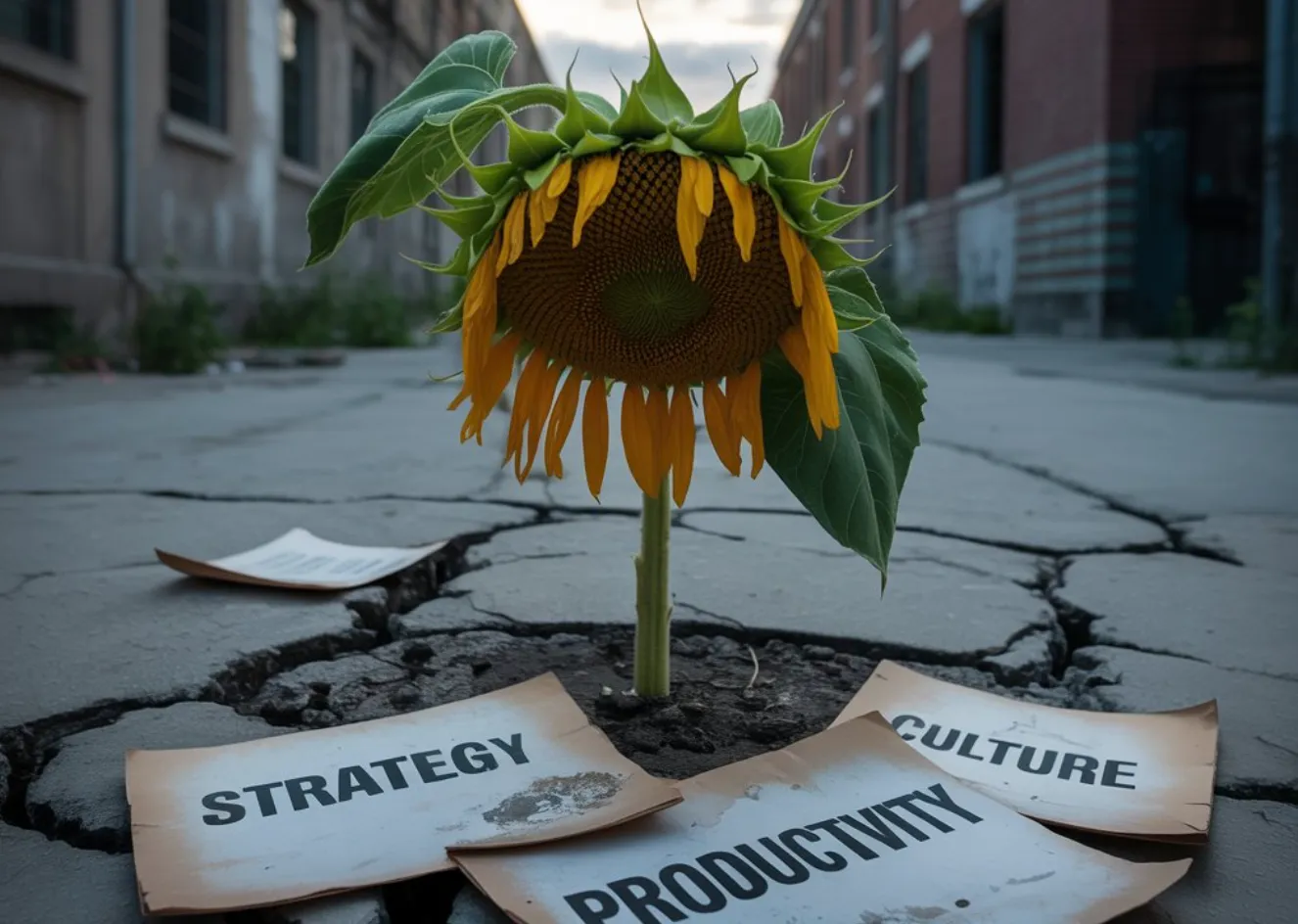
Most strategies do not fail because the spreadsheet was wrong.
They fail because the organisation does not have the leadership, structure, capability, culture or capacity to bring the strategy to life.
For many SMEs, people are not just a line item on the budget. They are one of the largest investments the business makes.
Wages alone commonly sit between 25% and 40% of revenue, and in labour-intensive industries this can be even higher. When you add superannuation, leave, workers compensation, recruitment, onboarding, training, leadership time and the hidden cost of turnover, it becomes very clear that people strategy is not a “nice to have”.
It is core business strategy.
Yet many businesses spend more time planning their marketing budget, technology systems or operational costs than they do planning how they will develop, engage and retain the people responsible for delivering results.
And for many SME owners, that is understandable.
You are often pulled into everything.
Client delivery.
Operations.
Cash flow.
Recruitment.
Performance issues.
Compliance.
Customer complaints.
Team dynamics.
The little fires that somehow become today’s full agenda.
But if people-related issues are constantly pulling you away from strategic work, that is not just an HR issue.
It is a business design issue.
A strong people strategy is not about creating a glossy document that sits in a folder and gathers digital dust.
It is about intentionally aligning your people, structure, leadership and culture with where your business is heading.
It helps answer questions like:
- Do we have the right roles in place?
- Are our leaders equipped to lead the next stage of growth?
- Are expectations clear?
- Do our people understand how their work connects to business outcomes?
- Are we building capability for the future, or just solving today’s problems?
- Are we creating a workplace people want to be part of?
A strong people strategy is also not just about recruitment or putting out people-related fires when they flare up.
It is about reducing the need for constant firefighting in the first place.
Five Questions Every SME Leader Should Ask
As you step into the new financial year, take time to reflect on these questions:
- Do our leaders have the capability to lead the growth we are planning?
- Are our roles, responsibilities and decision-making processes still fit for purpose?
- What critical capabilities will we need over the next 12 to 24 months?
- What people risks could prevent us from achieving our strategy?
- What kind of workplace are we intentionally creating?
- If we started the business again tomorrow, would we sell the same products, deliver the same services, hire the same people, create the same roles and use the same organisational structure?
That final question can be uncomfortable.
But it is powerful.
Because sometimes sustainable growth does not come from adding more.
More people.
More meetings.
More systems.
More activity.
Sometimes it comes from stepping back and asking whether the way the business is currently designed still supports where it needs to go next.
Why It Matters
When business strategy and people strategy work together:
- Leaders make better decisions.
- Employees understand what is expected of them.
- Teams adapt more effectively to change.
- Customers experience greater consistency.
- People risks are identified earlier.
- Organisations become more resilient.
- Business owners spend less time reacting and more time leading.
People strategy is not an HR document.
It is a business strategy.
And for SMEs, it can be the difference between growing in a way that feels chaotic and growing in a way that is intentional, sustainable and aligned with the impact the business was created to make.
Final Thought
The organisations that thrive over the next 12 months will not simply be the ones with ambitious goals.
They will be the ones with the people, leadership, culture and structure to achieve them.
At EHQ, we partner with organisations to align business strategy with people strategy, helping leaders build workplaces where people find purpose, organisations grow sustainably and performance follows.
Because sustainable growth starts with people.
If you are interested in exploring how EHQ could help your business shift from surviving to thriving, we would love to hear from you.
If you are interested in exploring how EHQ could help you to shift from surviving to thriving-reach out.